

Why Mental Health Deserves Our Attention Every Day
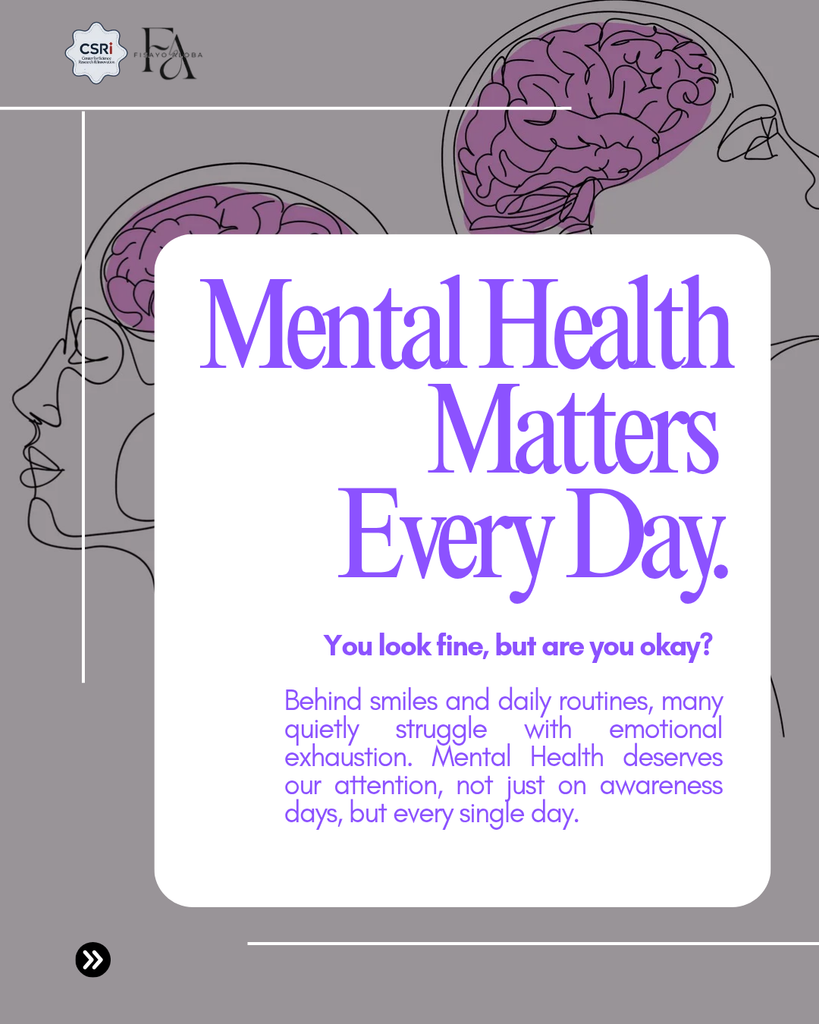
Imagine appearing cheerful, meeting deadlines and going about your daily routine while quietly struggling with emotional exhaustion. To those around you, everything may seem fine. Yet, beneath the surface, you may be finding it increasingly difficult to cope. This is one reason mental health deserves greater attention as distress is not always visible, and the absence of obvious signs does not necessarily mean someone is doing well.
Every year on October 10, World Mental Health Day provides an opportunity to raise awareness, challenge misconceptions and encourage action towards better mental health.
Understanding Mental Health Beyond Illness
Mental health is an essential part of overall health. It involves how we think, feel, relate to others, make decisions and respond to life’s challenges. It is not simply the absence of a mental health condition, it encompasses our ability to function, maintain relationships and navigate everyday experiences. Mental health can fluctuate throughout life due to circumstances such as stress, heartbreak, grief, financial difficulties or just any major life changes and this affect just about anybody.
The World Health Organization estimates that more than 1 billion people worldwide live with a mental health condition, highlighting the need for effective support. Yet, despite growing awareness, misconceptions and stigma continue to discourage people from discussing their experiences or seeking professional help. Mental health conditions are not signs of personal weakness and experiencing emotional difficulties should never be a reason for discrimination or shame.
From Awareness to Meaningful Action
The 2026 World Mental Health Day theme,“Lived Experiences Heard: Real Voices, Real Change”, places an important emphasis on listening to people who have experienced mental health conditions and ensuring their opinions influence the decisions that affect them. Their experiences can help healthcare professionals, researchers and policymakers better understand barriers to care and identify opportunities to improve mental health services. Meaningful inclusion means more than listening to personal stories, it means involving people in shaping policies, designing services and evaluating what works.
Creating healthier environments requires collective effort. Families and friends can offer understanding rather than judgement. Employers and educational institutions can promote supportive environments. Healthcare systems and policymakers can work towards improving access to appropriate services.
The Conversation Must Continue
Supporting mental health does not always begin with major interventions. Checking in on someone, listening without rushing to offer solutions, maintaining supportive relationships and making time for rest can all contribute to well-being.
World Mental Health Day may be observed once a year, but mental health requires attention throughout the year. Meaningful progress depends on continued education, stronger support systems and a willingness to listen to those whose experiences are often overlooked.
Coping Strategies: Small Steps Towards Better Mental Health
Caring for our mental health involves recognizing when we are struggling and taking practical steps to support our well-being. Some helpful coping strategies include:
- Seeing a Counsellor: Seeking guidance from a counsellor or mental health professional can help individuals understand their emotions, manage stress and develop healthier coping mechanisms.
- Talking to a Trusted Friend or Family Member: Sharing your feelings with someone you trust can provide emotional relief, reduce feelings of isolation and remind you that you do not have to face difficult moments alone.
- Take Time to De-stress and Exercise: Engaging in physical activities, relaxation techniques or hobbies can help relieve tension, improve mood and promote emotional well-being.
- Get Adequate Sleep: Quality sleep is essential for regulating emotions, improving concentration and helping the mind and body recover from daily stress.
- Maintain a Balanced Diet and Take Vitamins When Necessary: Good nutrition supports overall health and well-being. Vitamins and supplements may be helpful when deficiencies exist, but they should be taken with guidance from a qualified healthcare professional.
- Pray or Engage in Meaningful Spiritual Practices: For those who find comfort in spirituality, prayer can provide hope, reassurance and a sense of peace during challenging times. It can complement, but should not replace, professional mental health support when needed.
Ultimately, coping strategies differ from person to person. The important thing is to find healthy ways to manage stress, recognise when additional help is necessary and remember that seeking support is a sign of strength, not weakness., World Mental Health Day provides an opportunity to raise awareness, challenge misconceptions and encourage action towards better mental health.